Pokemon Printed 51 Billion Cards: What It Means
Pokemon printed 51 billion cards in five years. Here's what overprinting means for card values, sealed boxes, and your collection.
Contents
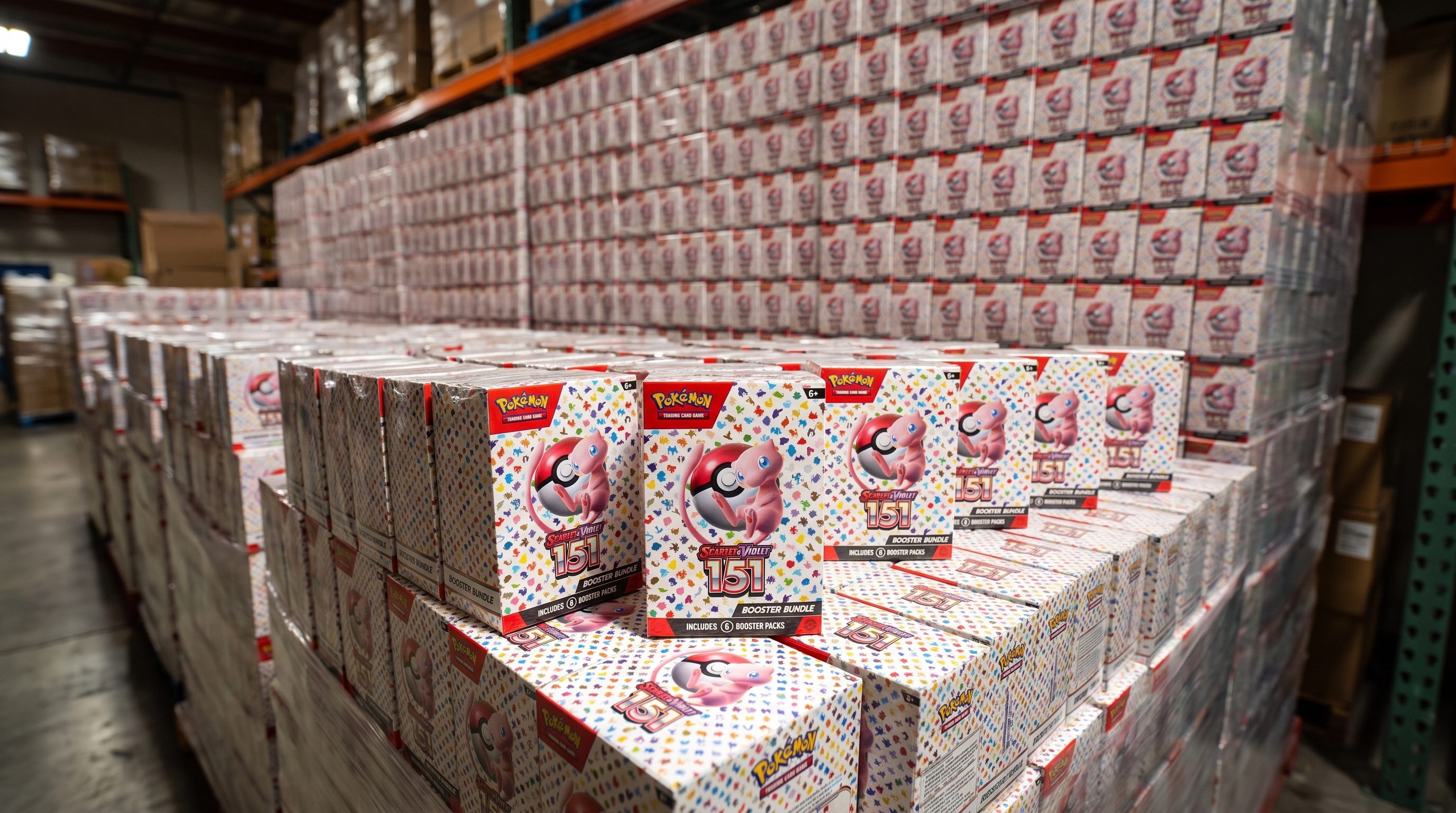
Every Pokemon collector has seen the number by now. The Pokemon Company passed 85 billion total cards printed as of March 2026, and 60% of every card ever made rolled off the presses in just the last five years.
That sounds like a supply glut, and overprinted has become the default word for it. The price data on sealed product tells a different story. Boom-era boxes are outperforming vintage, and the reason is structural. Pokemon retires sets permanently, so the sealed supply of those heavily printed years still shrinks.
Where the 51 billion number comes from
It took Pokemon roughly 25 years to print its first 34.1 billion cards, a mark reached by March 2021. The five years since added 51 billion more. Put those together and 60% of every Pokemon card ever made was printed in the last five years.
Annual output shows the ramp clearly. Production peaked at 11.9 billion cards in the year ending March 2024. The most recent year still added another 10 billion. This is not a company testing the market. It is a company printing flat out and still falling behind.
Why 10 billion cards a year still isn't enough
Ten billion cards a year sounds like more than enough, yet stores still can't keep booster packs on shelves. It remains basically impossible to walk into a GameStop or Walmart and buy recent sets like a normal person.
The bottleneck is demand. Millennium Print Group, Pokemon's printing partner, is building a 1.27 million square foot printing factory, due for completion by 2027 with full-scale operations expected in late 2028. Japan has already gone further, requiring government ID for certain Pokemon Center products to deter scalpers and restrict booster boxes to Japanese residents.
Until that new capacity lands, the gap between how much Pokemon can print and how much the market wants stays open.
The junk wax comparison keeps failing
When collectors hear that 60% of all cards were printed in five years, the instinct is to reach for 1990s baseball cards. Junk wax flooded the market and gutted values, so the parallel feels obvious. The sealed Pokemon data does not follow it.
Sword & Shield era boxes, manufactured during the biggest production surge in the game's history, returned a median 6.02x across 27 products. Vintage boxes from the Base, Neo, e-Card and EX eras returned 2.36x across 11 products over the same window. The heavily printed era beat the scarce era.
Live eBay Deals
Sponsored · #ad SAVE $464.48
Pokémon TCG Shining Fates Elite Trainer Box Factory Sealed
 SAVE $143.73
3x Pokémon Scarlet & Violet Prismatic Evolutions Sealed Elite Trainer Box ETB

Get notified immediately.
Receive alerts when stock is available, so you don't miss out.
Pulled something worth grading? Ark Grading does it in Melbourne, no overseas shipping, no 5-month wait. CardTracker readers get 5% off with code CARDTRACKER.
Grade with Ark →| Group | Median return | Boxes tracked |
|---|---|---|
| Sword & Shield (boom-print era) | 6.02x | 27 |
| Base, Neo, e-Card, EX (vintage) | 2.36x | 11 |
| Scarlet & Violet | 73% median annual growth | 27 |
| All 154 tracked boxes | 4.28x median, 97% higher | 154 |
The structural reason is what breaks the junk wax parallel. Pokemon permanently retires sets. Current products get reprinted while in production, but once a set is retired it is never replenished, and every box that gets opened leaves the sealed pool permanently. Junk wax baseball kept printing the same product for years. Pokemon stops, and the sealed supply only goes down.
Which overprinted sets actually hold
The question is which overprinted sets actually hold, not whether overprinting destroys value. The answer sits in the boom-era data. The vintage boxes the panic assumes are safer grew slower.
Scarlet & Violet, printed during the 10-billion-a-year period itself, is growing fastest of all eight eras at a median 73% per year, and every one of its 27 tracked boxes sits above its entry price. A 6.02x era median still hides wide variance box to box. That is where CardTracker helps. CardTracker tracks real-time eBay prices across every set, so you can see whether a specific booster box is holding or drifting before you commit, instead of leaning on an era-wide average.
For an Australian collector, the move is to watch sealed prices on the boom-year sets and buy when a specific box is trading near its support. Ignore the headline that says the hobby is collapsing.
The production pipeline ahead
More supply is coming, but not quickly. Millennium Print Group's 1.27 million square foot factory completes in 2027 and reaches full-scale operations in late 2028. Anyone expecting a flood of new product to soften prices should read that timeline twice.
Japan is already pulling the scalper lever, requiring government ID for certain Pokemon Center purchases. The English market has yet to follow, but the direction is set.
Until the new factory runs at full capacity in late 2028, overprinted is a word about production volume. The sealed data says the sets people are panicking over are the ones growing fastest.
Live eBay Deals
Sponsored · #ad SAVE $315.22
Pokémon TCG Shining Fates Elite Trainer Box Factory Sealed
 SAVE $288.61
Pokémon TCG 30th Celebration Classic Collection 1 Pack PRESALE

Explore CardTracker.au
📬 Monthly TCG Updates and Market Recap
Sign up for our mailing list. No spam - just the best deals and local market trends.
Please check your spam folder for the confirmation email!