Best Pokemon Card Sleeves for Collecting and Play
Penny sleeves for grading, Dragon Shield for tournaments, double sleeving for valuable cards. A use-case guide to the best Pokemon card sleeves in 2026.
Contents
- Pokemon card sleeve sizing: what actually fits
- Material matters: PVC-free and acid-free only
- For grading submissions: penny sleeves
- For competitive play: matte premiums and tournament brands
- For valuable collections: double sleeving and binder storage
- Official Pokemon sleeves vs third-party
- How many sleeves do you actually need
There is no single best Pokemon card sleeve. There are three different decisions dressed up as one, and most guides blur them together.
Sending cards to PSA? You need penny sleeves, full stop. Playing in tournaments every weekend? Shuffle feel and durability matter more than transparency. Storing a collection of cards worth real money? Double sleeving is the standard, and the inner sleeve size matters as much as the outer.
Each use case rewards a different sleeve. This guide separates them so you buy the right one the first time.
Pokemon card sleeve sizing: what actually fits
Pokemon cards are standard size: 66mm x 91mm (2.5" x 3.5"). Any sleeve labelled "standard size" fits. Yu-Gi-Oh sleeves are smaller. Jumbo or promo card sleeves are larger. Neither works for a regular Pokemon deck or collection.
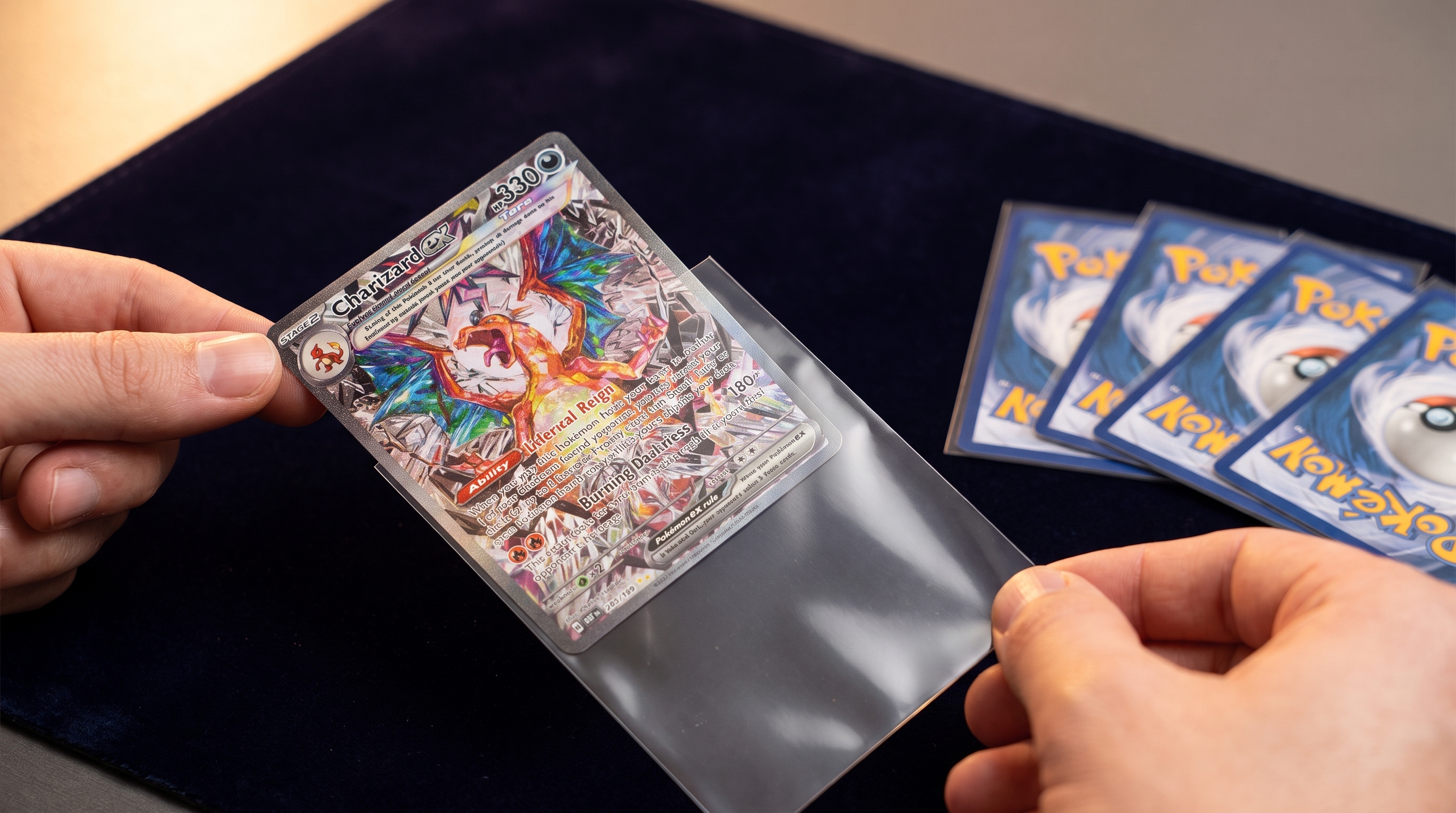
Perfect fit (inner) sleeves measure 64mm x 89mm and sit snugly against the card before a standard outer sleeve goes over them. These are used for double sleeving, covered below.
If you are buying online, check the listed dimensions. "Trading card sleeves" is a broad category, and a surprising number of listings are for the wrong card game.
Material matters: PVC-free and acid-free only
The sleeve material is more important than the brand name on the packet.
Look for sleeves that are acid-free and PVC-free. These materials are safe for long-term storage and will not damage the card surface. PVC-based sleeves, on the other hand, can damage cards over time through contact with the card surface.
Before buying any sleeve, check the product listing for "PVC-free" or "acid-free." If the listing does not mention the material at all, that is a reason to keep looking.
For grading submissions: penny sleeves
If you plan to send cards to PSA or Beckett, the sleeve choice is already made for you. Both grading companies ask for cards to be sleeved in penny sleeves before shipping, allowing for protection in the mail and easy removal by the grading team.
Penny sleeves work well for this because they are fully transparent, flexible, and known for not scratching cards upon sleeving. There is no tension or movement when changing around your deck, which matters when you are handling cards that might be worth hundreds of dollars graded.
Collectors who buy and sell on eBay also prefer penny sleeves for a practical reason: buyers do not have to re-sleeve the card when it arrives. Less handling means better condition. For anyone building a collection with an eye on grading or resale, penny sleeves are a mandatory investment.
For competitive play: matte premiums and tournament brands
Tournament players care about different things. Transparency is irrelevant when the card is face-down half the time. What matters is how the deck shuffles, how long the sleeves last through repeated use, and whether they stay consistent across 60 cards.
Matte or textured sleeve backs improve shuffle feel. Cards slide smoothly without sticking, which matters across a full tournament day of shuffling.
Dragon Shield has built its reputation on durability. The brand is dedicated to creating the best trading card sleeves for both collectors and players who use their cards regularly. When you use cards for the game on a regular basis, wear and tear is a real concern, and Dragon Shield sleeves are designed to resist ripping and becoming slippery. The brand is now the up-and-coming trading card sleeve maker rivalling Ultra Pro. A practical detail: their sleeves come in a little box that makes it easy to grab a fresh sleeve during pack openings or deck changes.
Live eBay Deals
Sponsored · #ad SAVE $464.48
Pokémon TCG Shining Fates Elite Trainer Box Factory Sealed
 SAVE $143.73
3x Pokémon Scarlet & Violet Prismatic Evolutions Sealed Elite Trainer Box ETB

Get notified immediately.
Receive alerts when stock is available, so you don't miss out.
Pulled something worth grading? Ark Grading does it in Melbourne, no overseas shipping, no 5-month wait. CardTracker readers get 5% off with code CARDTRACKER.
Grade with Ark →Quiver Artemis takes a different approach. These are thin, slippery, perfectly cut sleeves with a high-gloss material that makes them easy to move around boards and even easier to shuffle with, making them a strong choice for tournament play. The cut is accurate enough that the card sits just 1mm from the top of the sleeve, giving a sleek look. The trade-off: under heavy handling, a card can poke out of the top. Fine for low-value play cards, less ideal for anything expensive.
A standard Pokemon TCG deck has 60 cards, but buy 65 to 70 sleeves to account for damaged or replacement sleeves during a tournament.
| Sleeve | Best for | Shuffle feel | Durability | Fit |
|---|---|---|---|---|
| Dragon Shield | Regular play, long-term decks | Matte texture, smooth | High, resists wear | Standard (66 x 91mm) |
| Quiver Artemis | Tournament play, low-value decks | High gloss, slippery | Moderate | Tight cut, 1mm clearance |
| Penny sleeve | Grading, storage, resale | Not designed for shuffle | Low for repeated use | Standard, loose fit |
For valuable collections: double sleeving and binder storage
Single sleeving protects against scratches and fingerprints. Double sleeving protects against dust, moisture, and air. For cards worth serious money, the difference matters.
The process is straightforward. Insert the card into a perfect fit inner sleeve (64mm x 89mm), then slide that sleeved card into a standard outer sleeve. The inner sleeve seals the card from the back while the outer sleeve covers the front. Together, they create extra protection from water, air, and friction.
For the outer sleeve in a display or binder context, clarity is everything. Some soft card sleeves come in at just 40 microns thick with transparency so high it is as if the sleeve did not exist. That is what you want when presenting a card.
If you are storing sleeved cards in a binder, the pages themselves matter. Look for binder pages at 120 microns thick with high clarity that can hold sleeved or non-sleeved cards. That thickness means the pages last longer than standard alternatives. Use side-loading binder pockets to prevent dust from entering from the top.
For more on organising a larger collection, see our guides on the best Pokemon card binders, card storage options, and display setups.
Official Pokemon sleeves vs third-party
Pokemon Center and other branded art sleeves look good. Pikachu on the back of every card in your deck has obvious appeal for casual play and local meetups.
The trade-off is longevity. Custom art sleeves may wear out faster than premium third-party options. The printed designs can fade or peel with heavy use, which is fine if you swap sleeves every few months but a poor deal if you expect them to hold up through a tournament season.
If aesthetics are the priority and you replace sleeves regularly, official sleeves do the job. If you want sleeves that last, Dragon Shield or another premium third-party brand is the better investment.
How many sleeves do you actually need
Bulk packs typically come in sets of 100, which covers one deck with spares, or a chunk of a collection. For a single tournament deck, 65 to 70 sleeves is the right number. For a binder of 200 cards, two bulk packs covers it.
Avoid generic no-brand sleeves sold in bulk on marketplace sites. They are often inconsistently sized, and the cost savings evaporate when you have to replace them after a few weeks. Check for material specifications before buying.
Sleeves protect cards from scratches, dirt, fingerprints, and bending, and they are considered standard, especially if you plan to join official Pokemon TCG tournaments. Whatever you collect or play, the right sleeve for your use case is worth getting right from the start.
Live eBay Deals
Sponsored · #ad SAVE $315.22
Pokémon TCG Shining Fates Elite Trainer Box Factory Sealed
 SAVE $288.61
Pokémon TCG 30th Celebration Classic Collection 1 Pack PRESALE

Explore CardTracker.au
📬 Monthly TCG Updates and Market Recap
Sign up for our mailing list. No spam - just the best deals and local market trends.
Please check your spam folder for the confirmation email!